A digital salon of timeless works
My littleGallery
Step out of the noise. Enter a private collection where every masterpiece gets the space to be felt.
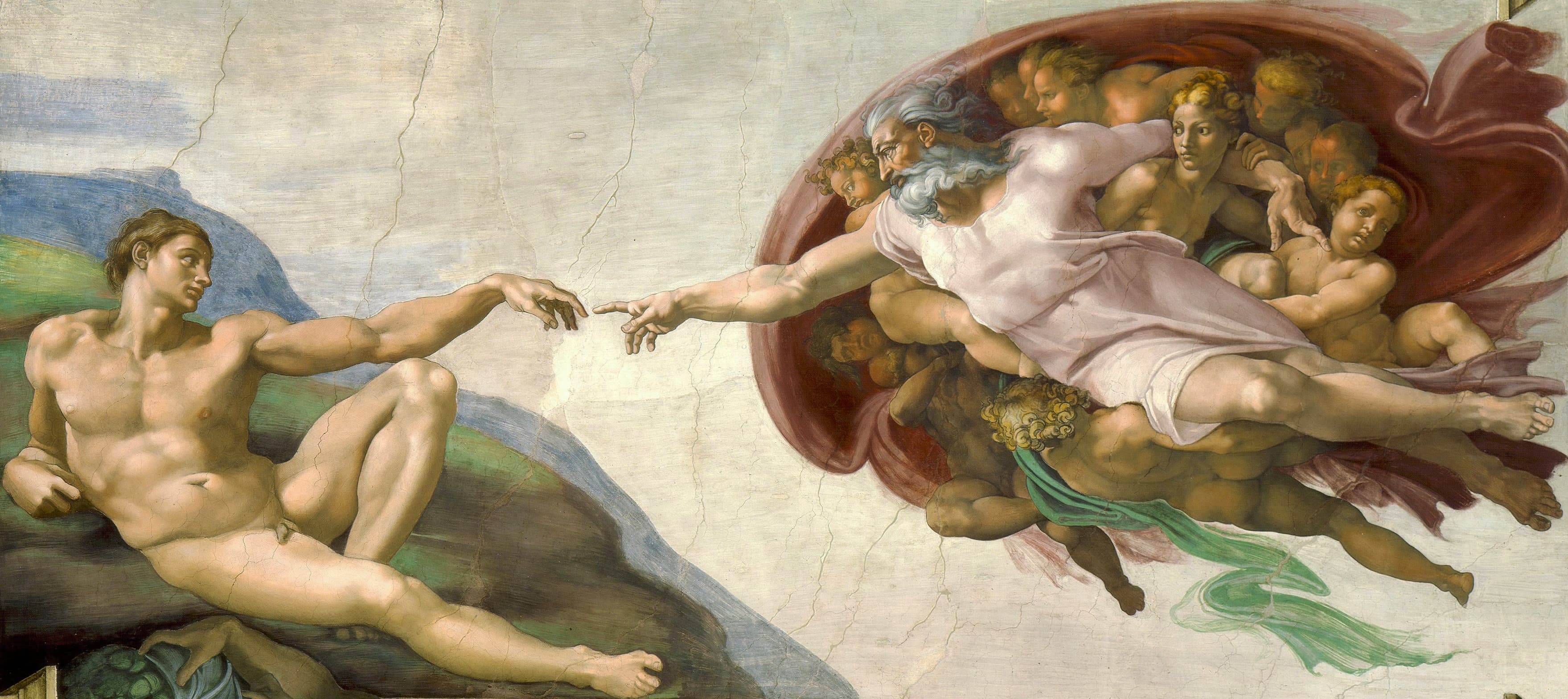
The Creation of Adam
Michelangelo
The Creation of Adam (Michelangelo)
The Creation of Adam (Italian: Creazione di Adamo), also known as The Creation of Man: plate 54 is a fresco painting by Italian artist Michelangelo, which forms part of the Sistine Chapel's ceiling, painted c. 1508–1512. It illustrates the Biblical creation narrative from the Book of Genesis in which God gives life to Adam, the first man. The fresco is part of a complex iconographic scheme and is chronologically the fourth in the series of panels depicting episodes from Genesis. The painting has been reproduced in countless imitations and parodies. Michelangelo's Creation of Adam is one of the most replicated religious paintings of all time.
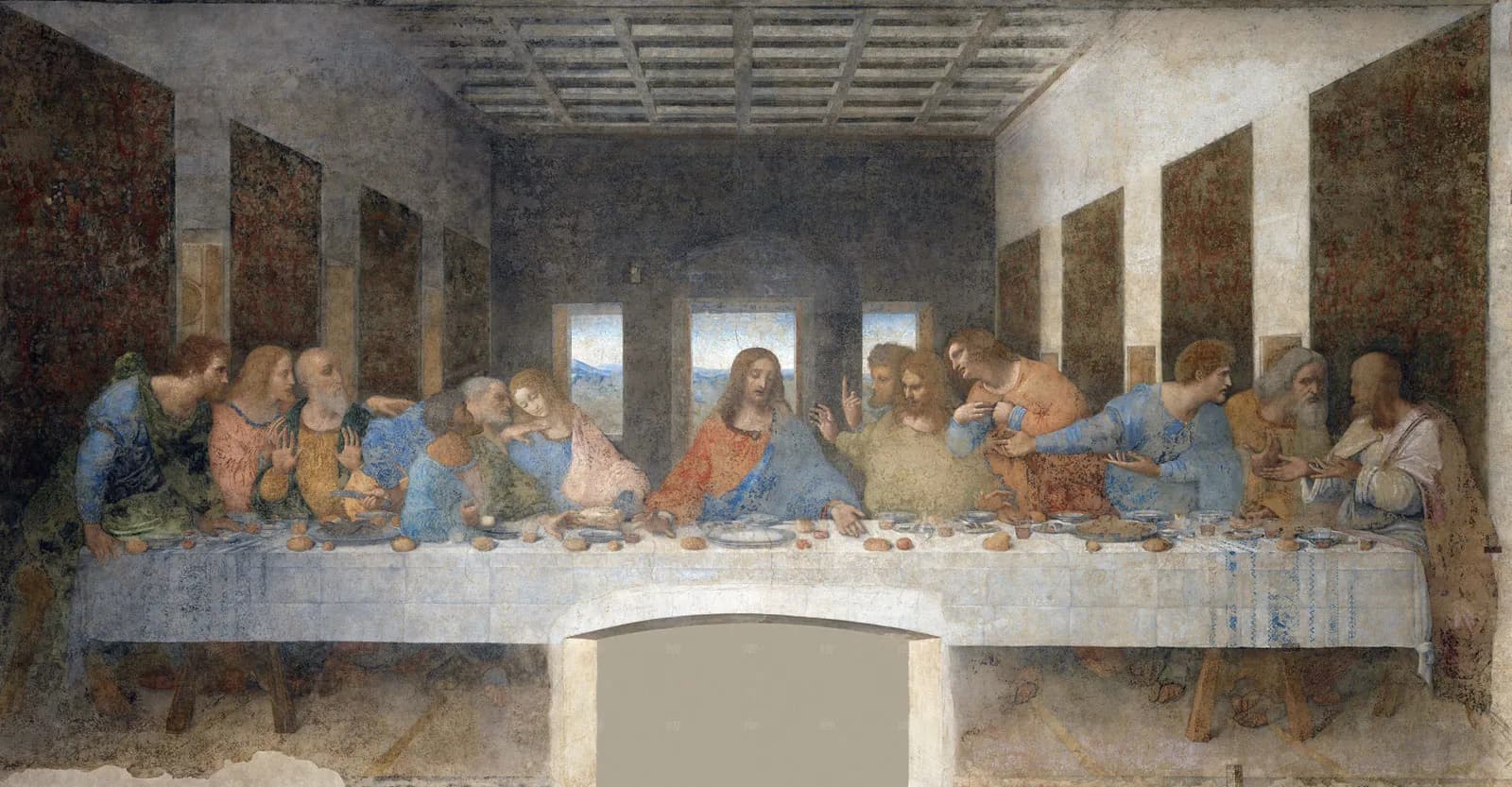
The Last Supper
Leonardo da Vinci
The Last Supper (Leonardo da Vinci)
The Last Supper is a mural painting by the Italian High Renaissance artist Leonardo da Vinci, dated to c. 1495–1498, housed in the refectory of the Convent of Santa Maria delle Grazie in Milan, Italy. The painting represents the scene of the Last Supper of Jesus with the Twelve Apostles, as it is told in the Gospel of John – specifically the moment after Jesus announces that one of his apostles will betray him. Its handling of space, mastery of perspective, treatment of motion and complex display of human emotion has made it one of the Western world's most recognizable paintings and among Leonardo's most celebrated works. Some commentators consider it pivotal in inaugurating the transition into what is now termed the High Renaissance. The work was commissioned as part of a plan of renovations to the church and its convent buildings by Leonardo's patron Ludovico Sforza, Duke of Milan. In order to permit his inconsistent painting schedule and frequent revisions, it is painted with materials that allowed for regular alterations: tempera on gesso, pitch, and mastic. Due to the methods used, a variety of environmental factors, and intentional damage, little of the original painting remains today despite numerous restoration attempts, the last being completed in 1999. The Last Supper is Leonardo's largest work, aside from the Sala delle Asse.
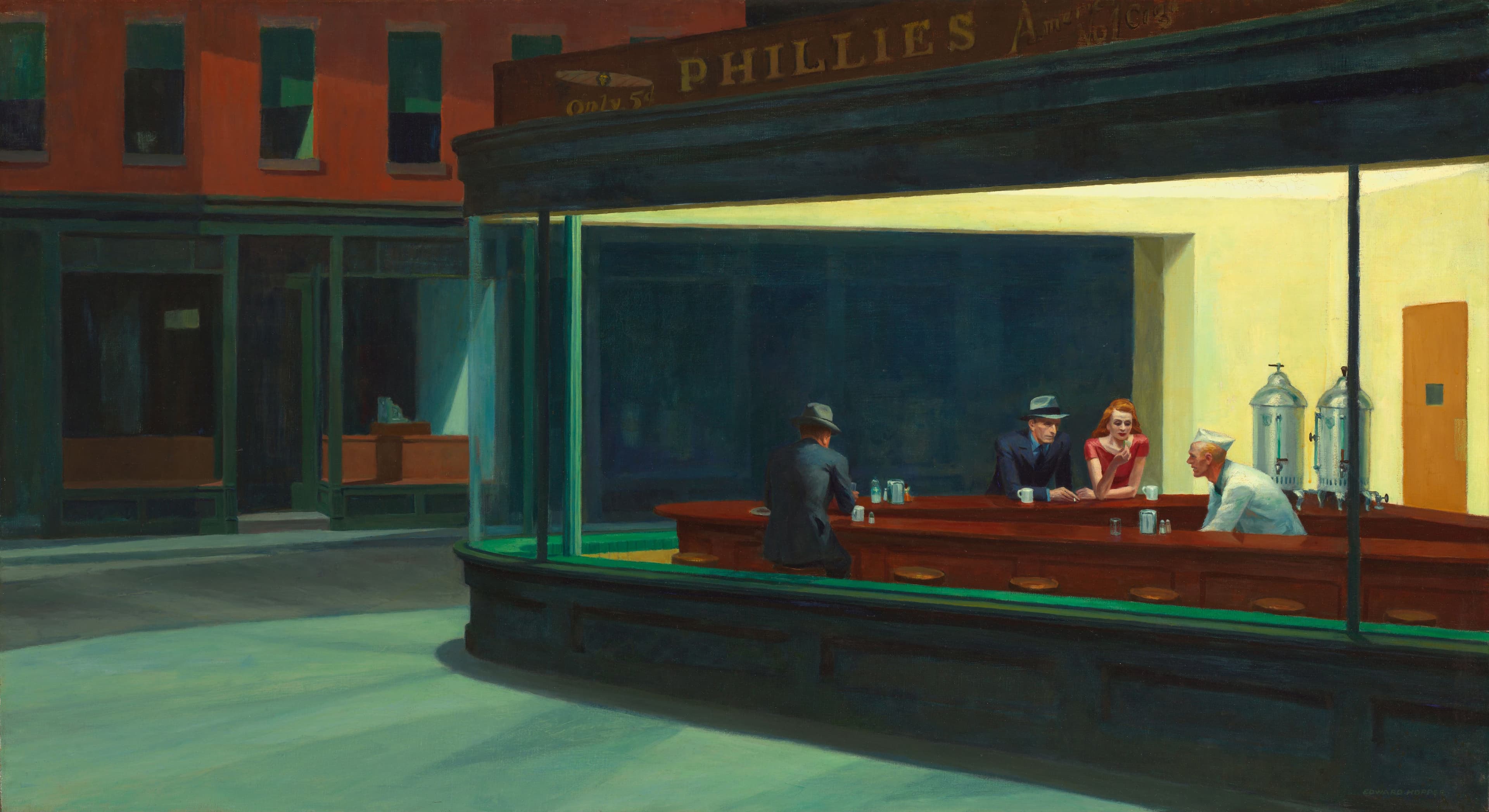
Nighthawks
Edward Hopper
NightHawks (Edward Hopper)
Nighthawks is a 1942 oil-on-canvas painting by the American artist Edward Hopper that portrays four people in a downtown diner late at night as viewed through the diner's large glass window. The light coming from the diner illuminates a darkened and deserted urban streetscape. <br /> <br /> It has been described as Hopper's best-known work and is one of the most recognizable paintings in American art. <br /> <br /> It has been suggested that Hopper was inspired by a short story of Ernest Hemingway's, either 'The Killers' (1927), which Hopper greatly admired, or from the more philosophical 'A Clean, Well-Lighted Place' (1933). In response to a query on loneliness and emptiness in the painting, Hopper outlined that he 'didn't see it as particularly lonely'. He said, 'Unconsciously, probably, I was painting the loneliness of a large city.'
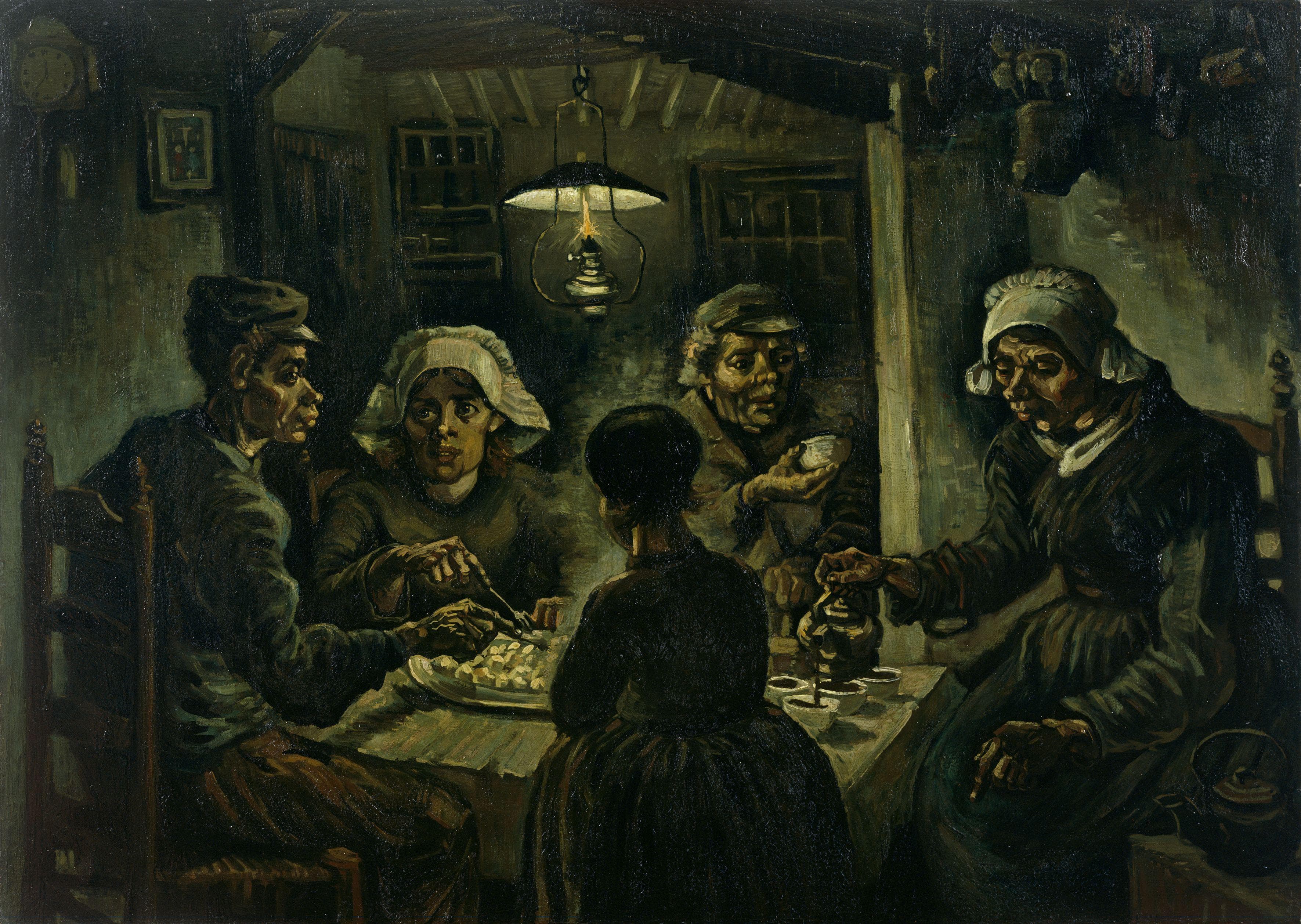
Potato Easter
Vincent Van Gogh
Potato Easter (Vincent Van Gogh)
The Potato Eaters (Dutch: De Aardappeleters) is an oil painting by Dutch artist Vincent van Gogh painted in April 1885 in Nuenen, Netherlands. <br /> <br /> It is in the Van Gogh Museum in Amsterdam. The original oil sketch is at the Kröller-Müller Museum in Otterlo, and he made lithographs of the image, which are held in collections including the Museum of Modern Art in New York City. The painting is considered to be one of Van Gogh's masterpieces. <br /> <br /> During March and the beginning of April 1885, Van Gogh sketched studies for the painting and corresponded with his brother Theo, who was not impressed with his current work nor the sketches Van Gogh sent him in Paris. He began working on The Potato Eaters while living with his parents in Nuenen, a rural town which was home to many farmers, labourers and weavers. <br /> <br /> Van Gogh said he wanted to depict peasants as they really were. He deliberately chose coarse and ugly models, thinking that they would be natural and unspoiled in his finished work.
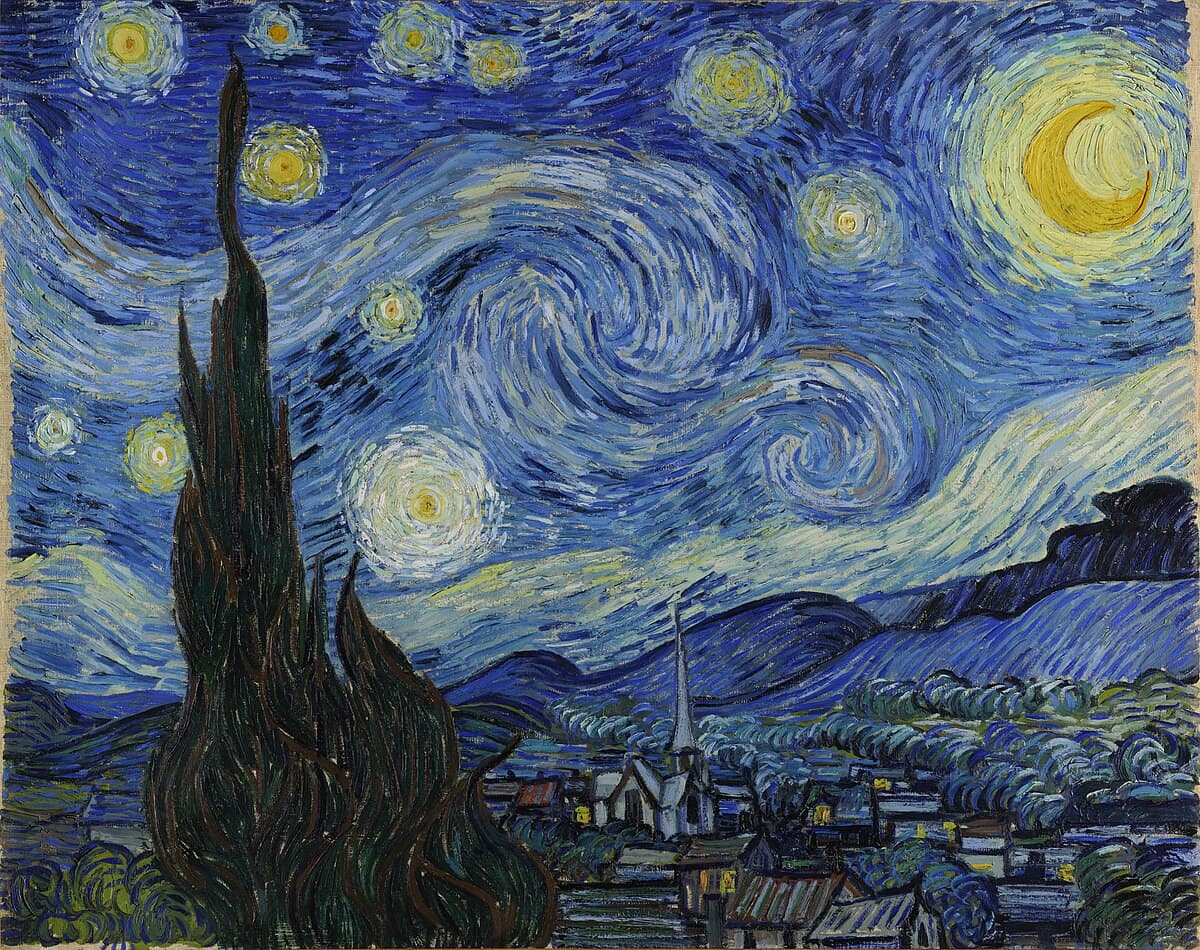
The Starry Night
Vincent Van Gogh
The Starry Night (Vincent Van Gogh)
The Starry Night is an oil-on-canvas painting by the Dutch Post-Impressionist painter Vincent van Gogh, painted in June 1889. It depicts the view from the east-facing window of his asylum room at Saint-Rémy-de-Provence, just before sunrise, with the addition of an imaginary village. It has been in the permanent collection of the Museum of Modern Art in New York City since 1941, acquired through the Lillie P. Bliss Bequest. Widely regarded as Van Gogh's magnum opus, The Starry Night is one of the most recognizable paintings in Western art.
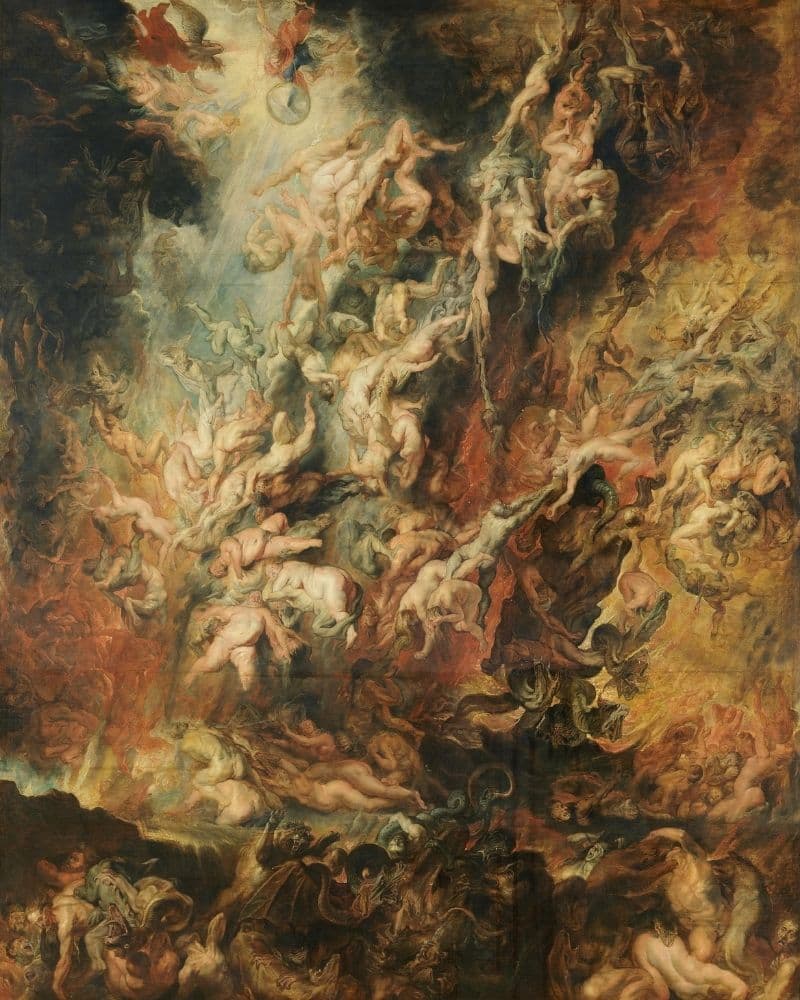
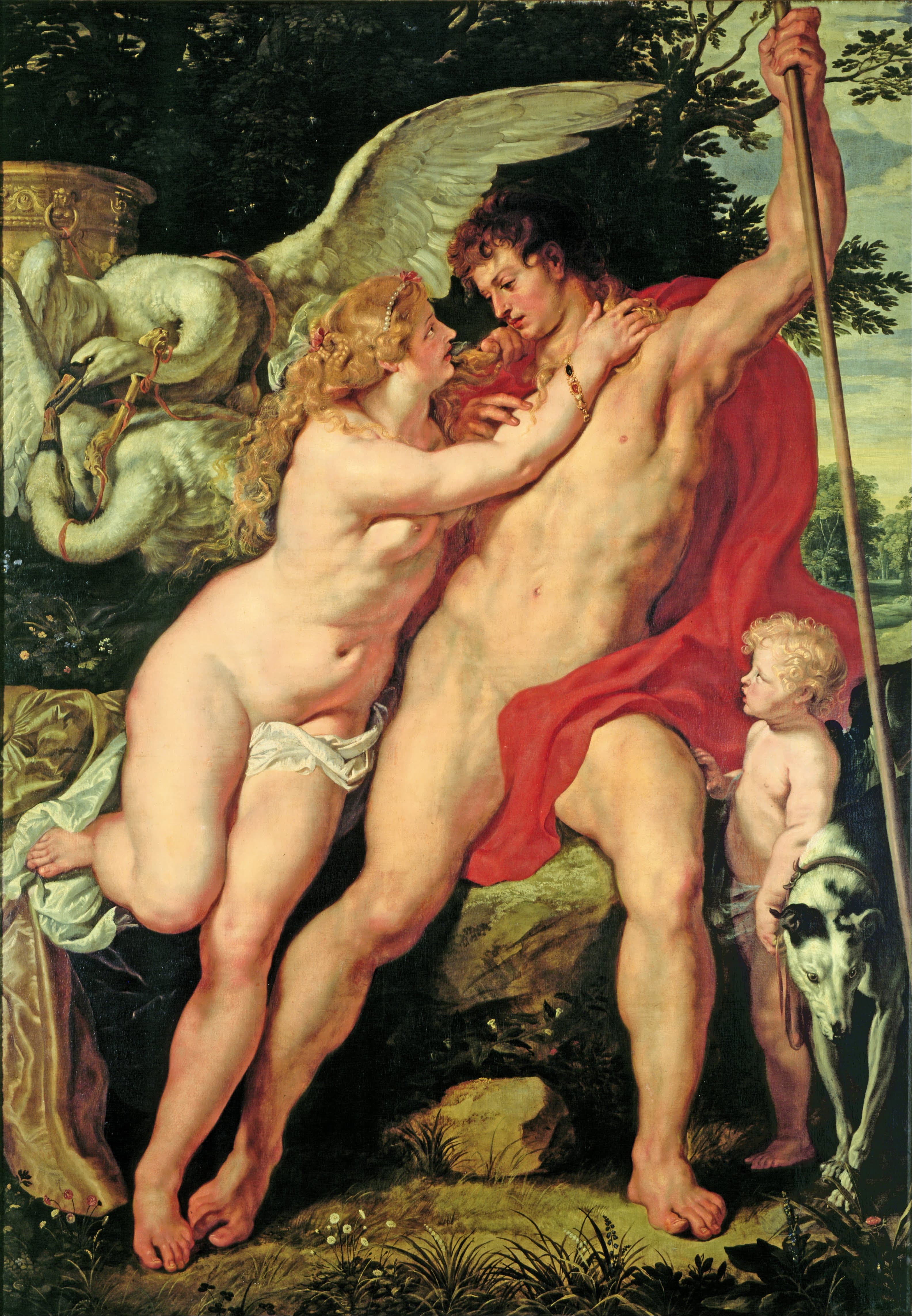
The Fall of the Damned
Peter Paul Rubens
The Fall of the Damned, alternately known as The Fall of the Rebel Angels, is a monumental religious painting by Peter Paul Rubens dated around 1620. It depicts a jumble of the bodies of the damned, hurled into the abyss by archangel Michael and accompanying angels. The sketch of The Fall of the Damned was made in black and red chalks, with a grey wash and is kept in the British Museum. It is assumed to be the work of a studio assistant, which Rubens then went over with a brush and oil colour. The dramatic chiaroscuro of the human forms and clouds emphasizes the darkness into which these figures fall, far from the heavenly light above.
One last look